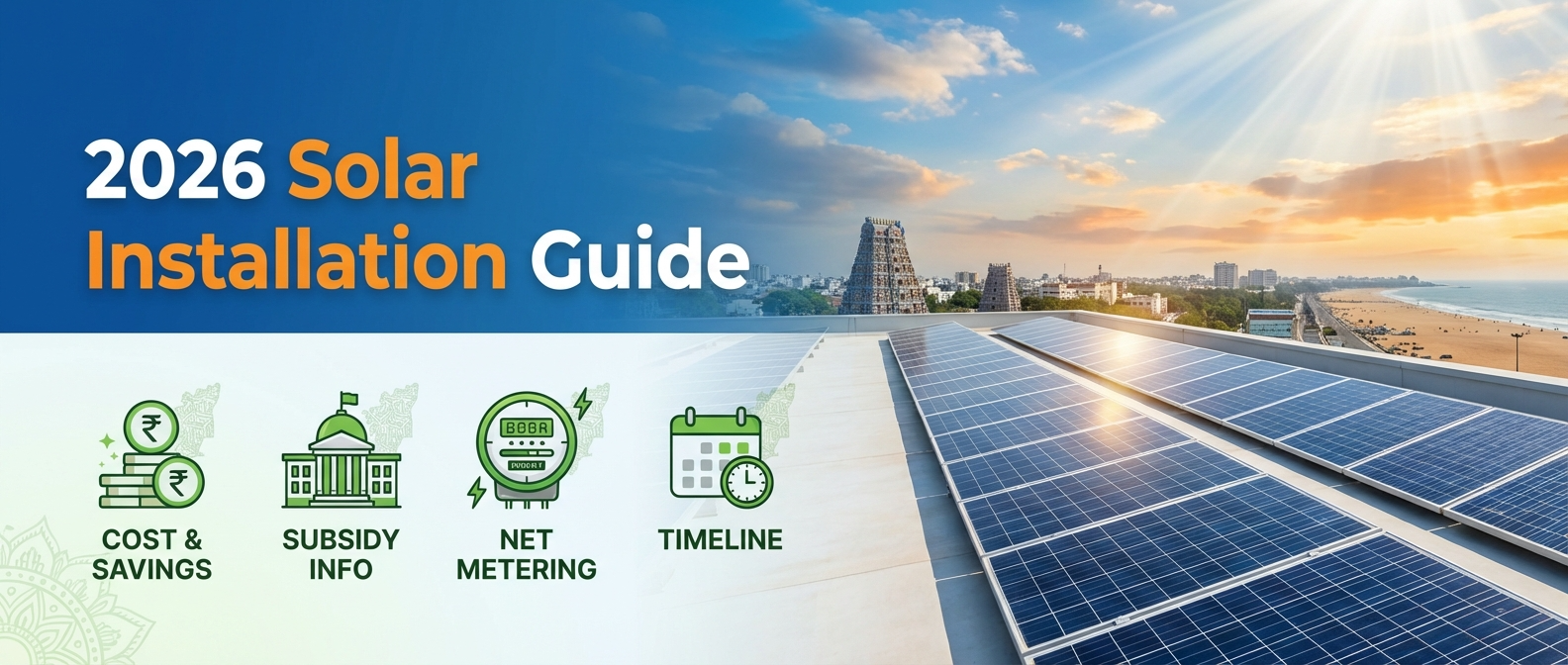
Chennai is rapidly emerging as one of India’s most active cities for rooftop solar adoption. Rising electricity tariffs, increasing air-conditioning usage, and improved government incentives have made solar energy a practical long-term investment for both homeowners and businesses. By 2026, solar panel installation in Chennai is no longer seen as an alternative solution. It is becoming a core part of residential and commercial infrastructure planning.
This article explains how solar panel installation works in Chennai today, including realistic costs, subsidy eligibility, net metering rules, installation timelines, and the technical considerations that directly impact system performance and return on investment.
Why Chennai Is Well-Suited for Solar Energy
Chennai receives consistent solar radiation throughout the year, averaging 5.5 to 6 units per square meter per day. This level of solar exposure makes rooftop solar systems highly efficient, even when compared to other major Indian cities.
Urban development patterns also work in favor of solar adoption. Independent houses, villas, industrial sheds, IT parks, warehouses, hospitals, and educational institutions typically have large, flat rooftops suitable for panel installation. In addition, most electricity consumption in Chennai peaks during daytime hours due to cooling loads, water pumping, and industrial activity. Solar systems generate power during these same hours, maximizing self-consumption and savings.
Common Types of Solar Panel Installations in Chennai
Solar installations in Chennai generally fall into three categories based on usage and scale.
Residential Rooftop Solar Systems
These systems usually range from 1 kW to 10 kW and are installed on independent houses and villas. Most residential systems are grid-connected, allowing excess power to be exported to the electricity board through net metering.
Commercial and Industrial Solar Systems
Factories, IT offices, hospitals, schools, and shopping complexes typically install systems starting from 20 kW and going up to several megawatts. These projects focus on reducing operational costs and improving sustainability compliance.
Apartment and Community Solar Projects
Apartment solar installations are more complex due to shared ownership and billing structures. However, many communities now install systems to power common areas such as lifts, corridor lighting, and water pumps.
Solar Panel Installation Cost in Chennai (2026)
The cost of installing solar panels in Chennai has stabilized in recent years. However, pricing still depends on panel quality, inverter type, rooftop conditions, and installer expertise.
Approximate Cost Before Subsidy
- 1 kW system. ₹55,000 to ₹70,000
- 3 kW system. ₹1.6 lakh to ₹2.1 lakh
- 5 kW system. ₹2.8 lakh to ₹3.5 lakh
- 10 kW system. ₹5.2 lakh to ₹6.5 lakh
These costs usually include solar panels, grid-tie inverter, mounting structures, cabling, monitoring system, installation, and commissioning. Battery storage is not included in standard grid-connected systems and significantly increases overall cost.
Government Subsidy for Rooftop Solar in Chennai
Residential solar consumers in Chennai are eligible for government subsidies under the MNRE rooftop solar program, provided the installation is done through approved vendors and complies with TANGEDCO guidelines.
Current Subsidy Structure for Homes
- Up to 3 kW. 40 percent subsidy
- 3 kW to 10 kW. 20 percent subsidy
- Subsidy capped at 10 kW per household
Commercial and industrial installations are not eligible for capital subsidies. However, businesses benefit from accelerated depreciation and tax incentives, which improve financial returns.
Subsidy amounts are credited directly to the consumer’s bank account after successful inspection and approval.
Net Metering in Chennai Explained
Net metering allows solar system owners to export unused electricity to the grid and receive credits for the exported units.
Key Net Metering Points in Tamil Nadu
- Available for residential and commercial consumers
- Monthly adjustment of imported and exported units
- Surplus generation may be carried forward as per DISCOM rules
- Requires bidirectional meter installation by TANGEDCO
Net metering significantly improves system economics, especially for homes and offices with lower daytime electricity usage.
Typical Solar Installation Timeline in Chennai
Solar installation timelines vary based on documentation and inspection schedules, but a standard project usually follows this sequence:
- Site inspection and feasibility assessment. 1 to 3 days
- System design and quotation finalization. 2 to 4 days
- Application submission and approval process. 7 to 15 days
- Material delivery and installation. 5 to 10 days
- TANGEDCO inspection and net meter installation. 10 to 30 days
Overall, most rooftop solar projects in Chennai are completed within 30 to 60 days.
Technical Decisions That Affect Performance
Many solar buyers focus only on panel wattage and price. This often leads to underperforming systems.
Solar Panels
Monocrystalline panels are preferred in Chennai due to higher efficiency and better heat tolerance.
Inverters
String inverters are suitable for simple rooftops. Micro-inverters or hybrid inverters work better for shaded areas or future battery integration.
Mounting Structures
Corrosion-resistant, hot-dip galvanized structures are essential due to Chennai’s coastal climate and humidity.
Monitoring Systems
A good monitoring system helps track daily generation, detect faults early, and evaluate long-term performance.
Common Mistakes During Solar Installation
- Selecting installers purely based on lowest cost
- Ignoring shading and rooftop orientation
- Using low-quality mounting materials
- Delays in net metering documentation
- Not planning for future load increases such as EV chargers
Avoiding these mistakes ensures stable generation and reduces maintenance issues.
Maintenance Requirements After Installation
Solar systems require minimal but regular maintenance.
- Panel cleaning every 15 to 30 days
- Visual inspection of wiring and mounts every six months
- Annual inverter performance check
Dust accumulation is common in Chennai and can reduce output by 10 to 15 percent if panels are not cleaned regularly.
Return on Investment for Solar in Chennai
Residential rooftop systems typically achieve payback within 4 to 6 years. Commercial and industrial systems often recover costs in 3 to 4 years due to higher consumption during solar generation hours.
With panel lifespans exceeding 25 years, solar installations provide long-term savings and energy security.
Choosing the Right Installer Is Critical
System performance depends heavily on installation quality, not just component brands. Experienced installers conduct proper site analysis, manage approvals efficiently, and offer reliable post-installation support.
If you are evaluating options for solar panel installation in Chennai ensure the provider clearly explains system design, subsidy eligibility, net metering procedures, and long-term maintenance responsibilities.
Conclusion
Solar energy adoption in Chennai is moving from early adoption to mainstream acceptance. Rising power costs, improved policies, and better technology make rooftop solar a sound financial and environmental decision.
Understanding costs, timelines, approvals, and technical factors before installation helps consumers avoid mistakes and maximize long-term benefits.
About the Author
This article is contributed by the team at HelioStrom, a solar energy solutions provider working on residential, commercial, and industrial rooftop solar projects across Tamil Nadu.